
Uncategorized
Visiting Nusa Penida from Bali in July: A Luxury Guide
Updated 10 Jul 2026 · 9 min read
On this page
- Why July is the Apex of the Nusa Penida Season
- Curating Your Passage: The Luxury Transfer from Bali
- Securing Your Sanctuary: Penida’s Most Exclusive Accommodations
- Beyond the Crowds: Bespoke Itineraries for the Discerning Traveler
- The Marine Spectacle: Diving with Giants in July
- Quick FAQ for Your July Trip
- Related reading
Traveling from Bali to Nusa Penida in July offers a peak dry-season experience, defined by optimal weather for island exploration and world-class diving. This period requires meticulous advance planning for luxury travel.
- Weather: Expect consistently sunny days with an average temperature of 27°C (81°F) and minimal rainfall.
- Bookings: High demand necessitates booking private villas, charters, and guides at least three to four months in advance.
- Marine Life: July is the prime month for spotting the elusive Mola Mola (oceanic sunfish) at key dive sites.
The low hum of the twin engines is a steady rhythm against the percussive slap of the hull on the Badung Strait. The morning sun, already assertive, warms the teak deck of your private charter as the volcanic silhouette of Bali’s Mount Agung recedes. Ahead, the formidable limestone cliffs of Nusa Penida rise from the turquoise water, not as a gentle invitation, but as a dramatic, raw declaration of nature’s power. A fine mist of sea spray kisses your face. This is not just a transfer; it is the prologue to an experience, the carefully orchestrated transition from the cultivated luxury of Seminyak to the untamed elegance of Bali’s wilder sister island. This is the art of arriving in Nusa Penida in July.
Why July is the Apex of the Nusa Penida Season
To understand Nusa Penida is to understand its seasons. While accessible year-round, July represents the island at its most brilliant and reliable. Meteorologically, it is the heart of the dry season. Daily sunshine averages between eight and nine hours, with rainfall dropping to a monthly average of just 40 millimeters. According to data from Indonesia’s Meteorology, Climatology, and Geophysics Agency (BMKG), this translates to predictably clear skies, ideal for photography and exploration without the interruption of tropical downpours. The humidity is also lower than in the shoulder months, making the equatorial heat feel more like a warm embrace than a sweltering blanket.
For the marine enthusiast, the conditions above the water are matched by the clarity below. Sea conditions in the strait are typically at their calmest, ensuring a smooth and swift crossing. More importantly, underwater visibility frequently exceeds 25 meters. This crystalline water clarity coincides with the arrival of one of the ocean’s most enigmatic creatures. “July is when the cold water upwellings from the Indonesian Throughflow are most pronounced,” explains marine biologist Dr. Ayan Wirawan. “This nutrient-rich water, dropping to temperatures around 22°C, draws the Mola Mola from the deep to be cleaned by reef fish. It’s a spectacle we wait for all year.” This convergence of perfect weather and unique marine phenomena solidifies July as the ultimate month for any discerning traveler bali to nusa penida journey.
Curating Your Passage: The Luxury Transfer from Bali
The 25-kilometer journey across the strait is the first chapter of your Nusa Penida story, and it deserves to be exceptional. While standard fast boats serve the masses from Sanur, the luxury traveler has far more refined options for traveling from Bali to Nusa Penida in July. The pinnacle of comfort and exclusivity is a private yacht charter. Companies operating out of Serangan Harbor offer vessels ranging from sleek Italian-style speedboats to fully-crewed catamarans. A half-day charter, which can cost upwards of $2,000 USD, allows for a leisurely departure, champagne on arrival, and the freedom to stop for a swim in the pristine waters off Nusa Lembongan en route. It transforms a simple transfer into a memorable maritime excursion.
For those who value speed and efficiency, a helicopter transfer is . Taking off from helipads near Benoa, the flight is a striking 15-minute aerial tour. You will witness the mix of Bali’s southern coast give way to the deep blue of the strait before soaring over the very cliffs you plan to explore. It’s a perspective that few ever see, offering a true sense of the island’s scale and rugged topography. If a private charter is not required, several premium fast boat operators provide a business-class experience. Look for services offering priority boarding, reserved seating in air-conditioned cabins, and inclusive hotel transfers in Bali. These elevated services ensure your journey is seamless and comfortable from start to finish. For a comprehensive look at all your options, our The Definitive Bali To Nusa Penida Guide offers in-depth comparisons.
Securing Your Sanctuary: Penida’s Most Exclusive Accommodations
Nusa Penida’s accommodation landscape is evolving rapidly, yet it retains a boutique, exclusive character distinct from mainland Bali. True luxury here is not found in sprawling, branded resorts but in architecturally designed private villas and intimate boutique properties that prioritize privacy and connection to the dramatic landscape. In July, securing these prime sanctuaries requires foresight, with top-tier properties often booked out six months in advance. Clifftop villas in areas like Suana or on the island’s western coast offer ocean vistas and privacy. A fully-staffed three-bedroom villa, complete with a private chef, infinity pool, and on-call driver, can range from $800 to $1,500 USD per night during this peak period.
“Our guests in July are not just booking a room; they are reserving an experience,” says Jean-Pierre, the manager of a collection of private villas near Diamond Beach. “They want the raw beauty of Penida without sacrificing comfort. That means pre-stocked pantries with their preferred champagne, yoga instructors arriving for sunrise sessions on their private deck, and dinner reservations made at the island’s few destination restaurants.” Boutique eco-resorts are another excellent choice, offering a blend of sustainable design and high-end service. Properties like Adiwana Warnakali Resort cater specifically to divers with five-star PADI centers on-site, while others focus on wellness and seclusion. When budgeting for your stay, it’s helpful to consult a detailed Bali To Nusa Penida Pricing & Cost Guide to understand the full spectrum of costs.
Beyond the Crowds: Bespoke Itineraries for the Discerning Traveler
The primary challenge of visiting Nusa Penida in July is navigating its popularity. The island’s iconic sights, like Kelingking Beach and Broken Beach, draw significant crowds between 10 AM and 3 PM. The luxury of a bespoke itinerary lies in experiencing these wonders in near solitude. This is achieved through strategic timing and private transport. A dedicated driver with a comfortable, air-conditioned 4×4 (a necessity for Penida’s notoriously rough roads, costing around 1,000,000 IDR for the day) is non-negotiable. Instruct your driver to begin your western island tour at sunrise, arriving at Kelingking Beach by 7 AM. At this hour, you will share the view with only a handful of others, the golden light illuminating the T-Rex-shaped cliff without the glare of the midday sun or the jostle of tour groups.
For a distinctive perspective, arrange for your chartered boat to anchor in the bay below Kelingking for sunset. Viewing the colossal cliff from the water, cocktail in hand, is an experience the day-trippers will never have. Similarly, Angel’s Billabong, a natural infinity pool, is best visited on a receding tide in the late afternoon when the crowds have thinned. A knowledgeable local guide can also lead you to lesser-known spots, such as the tranquil Tembeling Beach and Forest, or arrange a private blessing at the Giri Putri Cave Temple. This island is part of a region deeply informed by the Balinese Hindu philosophy of Tri Hita Karana, which emphasizes harmony between humans, nature, and the divine—a principle best appreciated in moments of quiet contemplation, far from the beaten path.
The Marine Spectacle: Diving with Giants in July
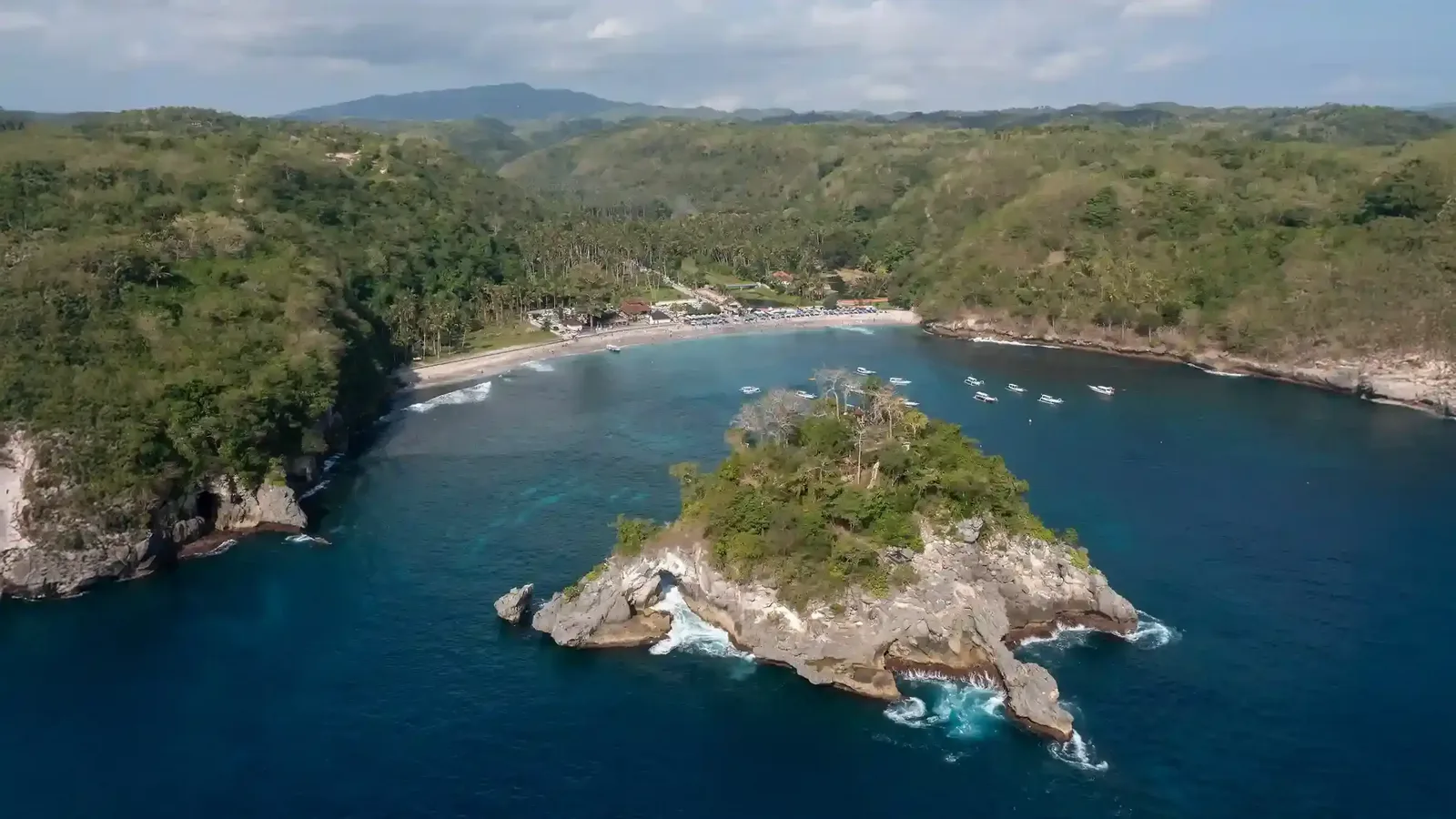
For the global diving community, Nusa Penida in July is synonymous with one thing: Mola Mola. The chance to encounter the world’s heaviest bony fish, the oceanic sunfish, transforms a dive trip into a pilgrimage. These gentle giants, which can reach over 3 meters in height, ascend from the depths to specific “cleaning stations” where bannerfish and other small wrasses pick parasites from their skin. The primary sites for these encounters are Crystal Bay and Gamat Bay. Success requires patience, a skilled dive guide, and a bit of luck. “The water is cold, the thermoclines are sharp, but the reward is a sighting that stays with you for a lifetime,” notes a senior instructor from a top-tier dive operator. “In a good week in July, our guests have a greater than 50% chance of an encounter.”
Beyond the Mola Mola, the waters around the Nusa islands—Penida, Lembongan, and Ceningan—are a designated Marine Protected Area teeming with life. Manta Point and Manta Bay, off the southern coast, offer virtually guaranteed sightings of majestic reef manta rays, which have wingspans of up to 4-5 meters. A private dive charter allows you to visit these sites on your own schedule and stay as long as you wish. These trips, expertly managed by PADI 5-star centers, provide high-quality rental equipment, small guide-to-diver ratios, and a focus on responsible interaction with marine life, ensuring these incredible encounters can continue for generations. As noted by the official tourism board, Indonesia Travel, the biodiversity here is a national treasure. The unique biology of the Ocean Sunfish makes every sighting a rare privilege.
Quick FAQ for Your July Trip
Is July too crowded on Nusa Penida? While July is the peak tourist month, a well-planned luxury itinerary effectively bypasses the crowds. By chartering private boats for transfers and tours, hiring a personal driver for early morning or late afternoon excursions to major sites, and staying in exclusive-use villas, you can cultivate a sense of serene isolation amidst the island’s busiest season.
What should I pack for a luxury trip in July? Your wardrobe should consist of lightweight, natural fabrics such as linen, silk, and high-quality cotton for the daytime. Include elegant resort wear, several swimsuits, a wide-brimmed hat, and high-SPF reef-safe sunscreen. For evenings, a light pashmina or cashmere wrap can be useful as coastal breezes pick up. Essential gear includes any personal dive or snorkel equipment, dive certification cards, and a quality underwater camera to capture the Mola Mola.
How do I handle money and payments on the island? High-end villas, dive centers, and a few upscale restaurants will accept major credit cards. However, the island’s infrastructure is still developing, and cash (Indonesian Rupiah – IDR) is essential for smaller cafes, local shops, and tips. It is advisable to bring a sufficient amount of cash from Bali, as ATMs on Nusa Penida can be unreliable. For securing your travel in advance, you can Book Bali To Nusa Penida services through secure online payment portals.
A journey to Nusa Penida in July is a study in beautiful contrasts: the raw, untamed power of its coastline met with the refined comfort of a meticulously planned escape. It is an opportunity to witness world-class natural phenomena—both above and below the water—while insulated from the logistical challenges of peak season travel. The island does not give up its secrets easily, but for the traveler who values expert guidance and seamless execution, its rewards are immeasurable. Planning your bali to nusa penida passage is the first step toward unlocking this extraordinary destination. To begin crafting your bespoke July itinerary, explore our curated transfer options and allow us to manage every detail of your arrival.
Related guides